What Makes a Family Dentist Different from a General Dentist? 

When it comes to choosing a dental care provider, the terms “family dentist” and “general dentist” often get used interchangeably. While both are fully trained professionals who provide essential oral health services, there are some key differences between the two.  

Difference Between Family Dentist and General Dentist 

Understanding what sets every Pittsburgh dentist apart can help you make the right choice for you and your loved ones. 

What Is a General Dentist? 

A general dentist offers a wide range of dental services for adults. These professionals handle everything from routine cleanings and fillings to crowns, root canals, and gum disease treatment. Their primary focus is to maintain and restore the oral health of their patients. 

General dentists may also offer cosmetic treatments like whitening and veneers. However, they typically treat individuals within a specific age group—usually older teens and adults. If you don’t have children, a general dentist might be a perfect fit. 

How a Family Dentist Expands on General Dentistry 

Family dentists provide all the same services as general dentists, but they offer care for every age group—children, teens, adults, and seniors. Instead of limiting their practice to one demographic, family dentists are trained to address oral health needs at every stage of life. 

For example, they know how to help kids feel at ease during appointments and can track the development of your child’s teeth from their very first visit. This flexibility makes family dentists an excellent option for households with kids and adults alike. 

Building Long-Term Relationships with the Whole Family 

One of the biggest advantages of choosing a family dentist is the continuity of care. When everyone in your household sees the same dentist, the provider gets to know your family’s dental history, preferences, and any inherited concerns that may arise. 

Additionally, scheduling becomes more convenient. Many family dentists offer group appointments so parents and kids can be seen on the same day. That consistency helps build trust over time, especially for younger patients who may feel nervous. 

Kid-Friendly Environment and Approach 

Family dentists are often skilled in pediatric dentistry techniques, even if they aren’t board-certified pediatric specialists. They know how to make appointments enjoyable for children by using gentle language, smaller tools, and positive reinforcement. 

From teaching your child how to brush properly to helping prevent cavities with fluoride treatments and sealants, a family dentist focuses on building lifelong dental habits from an early age. 

Convenience and Comprehensive Care Under One Roof 

Another key benefit of family dentistry is convenience. Instead of juggling appointments across multiple offices, your entire family can receive care from the same team. This streamlined approach saves time and reduces stress, especially for busy parents managing hectic schedules. 

Moreover, family dentists often provide expanded hours, emergency services, and a wider range of treatment options tailored to various life stages—all under one roof. 

Conclusion: Difference Between Family Dentist and General Dentist 

While general dentists provide excellent care, family dentists offer a more inclusive and flexible experience. They treat patients of all ages, provide long-term consistency, and make dental care easier for the whole household. If you’re looking for a one-stop solution that grows with your family, choosing a family dentist could be the smartest move for your smiles—young and old alike. 

What Older Properties Are Hiding Inside Their Walls and Why It Matters

There is a particular charm to older homes and buildings that newer construction rarely replicates. The craftsmanship, the character, and the history embedded in an older property are genuinely appealing. What is less appealing, and far less visible, is what decades of aging electrical infrastructure may be concealing inside those walls, ceilings, and panels.

Age and Character Do Not Have to Come with Hidden Risk

Owning an older property does not mean accepting electrical hazards as part of the package. Understanding what to look for, knowing when professional assessment is warranted, and taking action before problems escalate are what separate properties that age gracefully from those that become liabilities. For owners of older homes and commercial buildings, electrician Charleston SC professionals provide the expertise to identify and resolve aging electrical issues before they create serious consequences.

Knob and Tube Wiring Was Never Designed for Modern Demands

Properties built before the mid twentieth century were frequently wired with knob and tube systems, an early wiring method that uses separate hot and neutral conductors routed through ceramic knobs and tubes rather than the sheathed cable systems used today. Knob and tube wiring has no ground conductor, does not tolerate insulation being packed around it, and was sized for electrical loads that bear no resemblance to what modern households and businesses require. 

Aluminum Wiring Creates Risks That Copper Does Not

During a period in the 1960s and 1970s, aluminum wiring was widely used in residential construction as a lower cost alternative to copper. Aluminum expands and contracts at a different rate than the copper connections and terminals it attaches to, creating loosening over time at connection points that generates heat. That heat buildup at connections is a known fire risk that has been well documented for decades. 

Outdated Grounding Systems Leave People and Equipment Vulnerable

Electrical grounding is the safety mechanism that redirects fault current away from people and equipment when something goes wrong in a circuit. Older properties frequently lack proper grounding throughout, particularly in areas like kitchens, bathrooms, and outdoor spaces where the National Electrical Code now requires ground fault circuit interrupter protection. 

Deteriorating Insulation Is an Invisible Fire Hazard

Electrical wire insulation does not last forever, and in properties several decades old, the insulation surrounding conductors may have become brittle, cracked, or degraded to the point where it no longer provides reliable separation between energized conductors and surrounding materials. This deterioration happens inside walls where it is completely invisible during routine inspection. Heat, rodent activity, and simple age all accelerate insulation breakdown in ways that create arc flash and fire risks that give no warning before something goes wrong.

Conclusion: Age and Character Do Not Have to Come with Hidden Risk

To pull it all together, older properties carry electrical risks that are invisible by nature and serious by consequence. Knob and tube wiring, aluminum conductors, inadequate grounding, and deteriorating insulation are not theoretical concerns reserved for the oldest buildings. They are real conditions present in properties across every neighborhood that has been standing for several decades. A professional electrical assessment is the step that turns uncertainty into clarity and gives older property owners the information they need to protect what they have invested in.

How Can I Cut My Risk of Getting COVID if I Live in an Apartment?   

In the past two years, governments have enforced laws for people and returning travelers to get home-quarantined for a couple of days, or for people to home isolate for a couple of months. Now, if you live in an apartment and have to go out for groceries and other important tasks, you need to reduce the risk of infection, especially since you have other people living with you.   

There have been reported cases of COVID spread among people sharing confined spaces and that includes apartment spaces. While there are house cleaning services Pittsburgh PA that are effective to remove bacteria and viruses, you still need to do your role and responsibilities.  

The following are the things you can do to avoid getting covid even if you live in an apartment:  

1. Always watch out for garbage area and laundry – living in the apartment means shared equipment when it comes to doing laundry and garbage spaces. Shared gyms, laundries, and indoor garbage areas are risky spaces especially when your apartment does not have proper ventilation.   

The best thing you can do is to arrange a route that gives people in the apartment access at a certain time and ensure that there is at least an hour elapsed in between. Also, you can have a combined washer-dryer in the bathroom or kitchen. This can be a good investment since we can expect that pandemic is far to end.   

2. Do not go to poorly ventilated spaces – you have a greater chance to catch the COVID virus when you are in a poorly ventilated area since the air continues circulating within the space. At least wear your mask when you go to these spaces. Or better yet, ensure that your space contains good ventilation and is regularly cleaned and sanitized.  

3. Always wear your mask before opening the door on your way out. A lot of people wear masks but the timing is also necessary. Before you opened the door to the outside, make sure that you already have worn your gear, in this case, your mask. Wear this mask even when just receiving deliveries or letting in some guests and visitors.   

4. Ask about the elevator – as an occupant, you have the right to ask for the lift or elevator’s health protocols and even suggest some things. Ask for the capacity of the elevator and ask if a purifier can be installed inside.   

6. care about if you smell your neighbor’s cooking dish – the reason why you are able to smell their dishes’ aroma is that you two are sharing air. This can be equated to what we call air leakage. Take note of this and do necessary interventions. You can install a HEPA air purifier in your room to reduce the risk, and advice your neighboring room to do the same. You can even seal up the wall or door with an adhesive material to block off the air leakage.   

7. Do regular cleaning – cleaning with antibacterial soaps can reduce the risk of infection. Always schedule cleaning within your room. 

How to Know When a Tree on Your Property Has Reached the End of Its Life

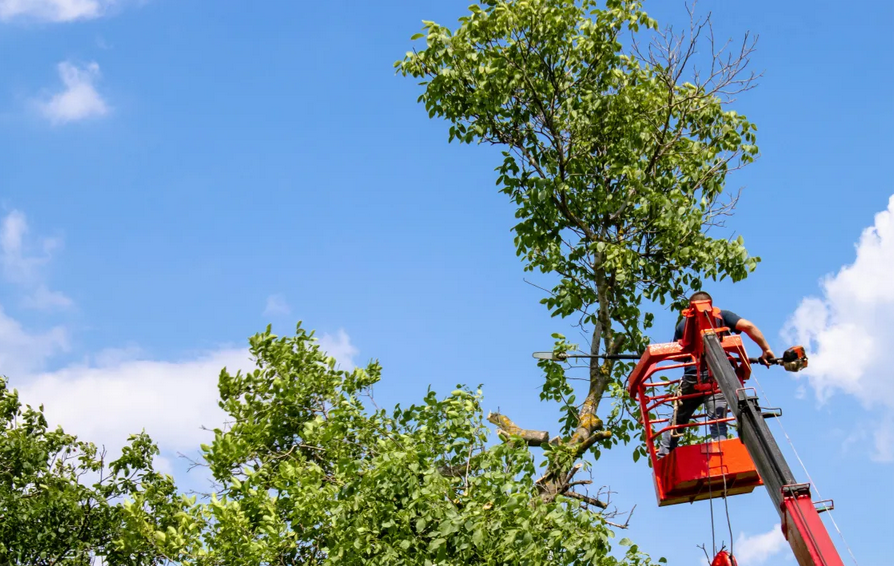
Trees are long term assets that add beauty, shade, and value to any property. Most homeowners naturally want to preserve them, and that instinct is usually the right one. The challenge is recognizing the point at which a tree has declined beyond recovery and holding onto it creates more risk than removing it does.

The Decision to Remove a Tree Is Sometimes the Responsible One

Letting go of a tree that has defined your yard for years is not an easy call, but it is sometimes the most responsible one a property owner can make. Knowing the signs that indicate a tree has reached the end of its functional life helps you make that decision from a position of knowledge rather than uncertainty. For property owners navigating that decision, tree removal Atlanta professionals provide honest assessments and safe, efficient removal when the time comes.

Structural Decline Is Not Always Visible from the Outside

A tree can appear healthy from a distance while harboring significant internal decay that has compromised its structural integrity. Fungal growth at the base of the trunk, soft or hollow sections when the bark is tapped, and the presence of carpenter ants or other wood boring insects are all indicators of internal decay that weakens a tree from the inside out. S

Dead or Dying Branches Signal a Larger Problem

A few dead branches in an otherwise healthy canopy can often be addressed through selective pruning without removing the entire tree. When dead or dying branches represent a significant portion of the canopy, however, the situation tells a different story. Widespread branch dieback typically reflects a root system, vascular system, or trunk condition that has deteriorated beyond the point where the tree can sustain healthy growth. 

Root Damage Creates Instability That Is Easy to Underestimate

The root system of a mature tree extends well beyond the visible canopy and provides the structural foundation that keeps the tree standing under normal and adverse conditions. Construction activity, soil compaction, grade changes, and disease can all compromise root systems in ways that are not visible above ground until the tree begins to lean, heave the surrounding soil, or show signs of stress in its upper growth. 

Location Determines How Urgently a Declining Tree Needs to Come Down

Not every declining tree presents the same level of urgency. A tree showing signs of structural weakness in an open field carries a different risk profile than the same tree positioned over a roof, a driveway, a fence line, or a space where people regularly gather. Location is a critical factor in the removal decision, and trees situated where a failure would cause property damage or personal injury move to the front of the priority list regardless of how gradual their decline has been. 

Conclusion: The Decision to Remove a Tree Is Sometimes the Responsible One

To bring it all together, recognizing when a tree has declined beyond recovery requires looking past surface appearance and understanding the structural, biological, and location factors that determine real risk. Internal decay, widespread branch dieback, root damage, and proximity to structures are the signals that tell a property owner it is time to act. Removing a tree at the right moment, with the help of qualified professionals, protects your property, your safety, and the surrounding landscape from the consequences of waiting too long.

Foods to Avoid for a Healthier Set Teeth  

A smile can make an impression, and this is why oral hygiene needs to be maintained. And unfortunately, no matter what age you are in, the reasons for tooth decay remain the same: everything you take inside your mouth (of course, besides the frequency of teeth brushing). Just because excellent dentist Raleigh services are present does not mean that you rely heavily on them and forget to do your part.   

Tooth decay often happens when bacteria build up on the teeth that feed on the sugar from the food that you eat. Those sugars build up cavities that may even form plaque. Cavities are formed from bacteria metabolizing these sugars that turn them into acid, damaging your teeth. Yep, this is the reason why sugary foods are the number one enemy against a good set of teeth.   

The following are the foods that contribute to tooth decay including sugary foods:  

1. Sugary foods like candies and sweets – foods like candies, cakes, pies, cookies, chocolates, and others really contribute to faster tooth decay. Besides diabetes, sweet foods and delicacies that stay longer in your mouth and settle on your teeth or in between them attract bacteria and cause cavities. Hard candies that stay long such as jelly beans, lollipops, caramels, and others that can be difficult to wash away by the saliva are on the top list. Now, if you really cannot hold yourself from eating candies and your favorite dessert, just remember to eat those that quickly dissolve. Also, eat them after meals and minutes before brushing your teeth and never in between meals.   

2. Citrus fruit and wine – citrus fruits can be seen as part of a healthy diet. However, when you eat them on their own on a frequent basis, the acid from these fruits is enough to wear away the tooth enamel which leaves your teeth more vulnerable to decay and cavities. If you plan on drinking their juices, we recommend that you use a straw so the citric acids bypass your teeth and avoid damage.   

Additionally, white and red wine contain acid too, which leads to the same damaging effects. Moreover, red wine contains tannins, a kind of compound that is staining to the teeth. Make sure that you brush your teeth thoroughly to avoid stains and acid settling on the teeth.   

3. Soft drinks and sports drinks – soft drinks typically contain a lot of sugar in them, which again contributes to bacteria and cavities. How about sugar-free soft drinks? Less sugary drinks still have acid in them that damages enamel and tooth, in general, so there is no escape from the damage. Especially sports drinks, which contain too many carbohydrates and viscous liquids. The thickened liquid can stay in your mouth for too long, attracting bacteria.   

It is recommended that you drink unsweetened tea or water to fuel your body, and avoid any kinds of juices in general. Water is healthy, overall.   

4. Pasta sauce – tomatoes are acidic and when you eat them with pasta that contains carbs, it doubles the damage that your enamel gets.   

Bottomline  

The bottom line is that anything that contains sugar and acid should be avoided. Of course, proper and thorough teeth brushing is required too.